Monivea Castle
The village of Monivea grew up to serve an estate. The ffrenches, one of the fourteen Tribes of Galway, took over a tower house of the O'Kellys, fortified it, built Monivea Castle around it and, over generations, turned bogland into parkland ringed by five rows of huge beech trees. By 1876 the estate ran to 10,121 acres, and when the last of the family, Kathleen ffrench, died in 1938 she left it to the Irish nation.
Checked against the source on 2026-09-19.
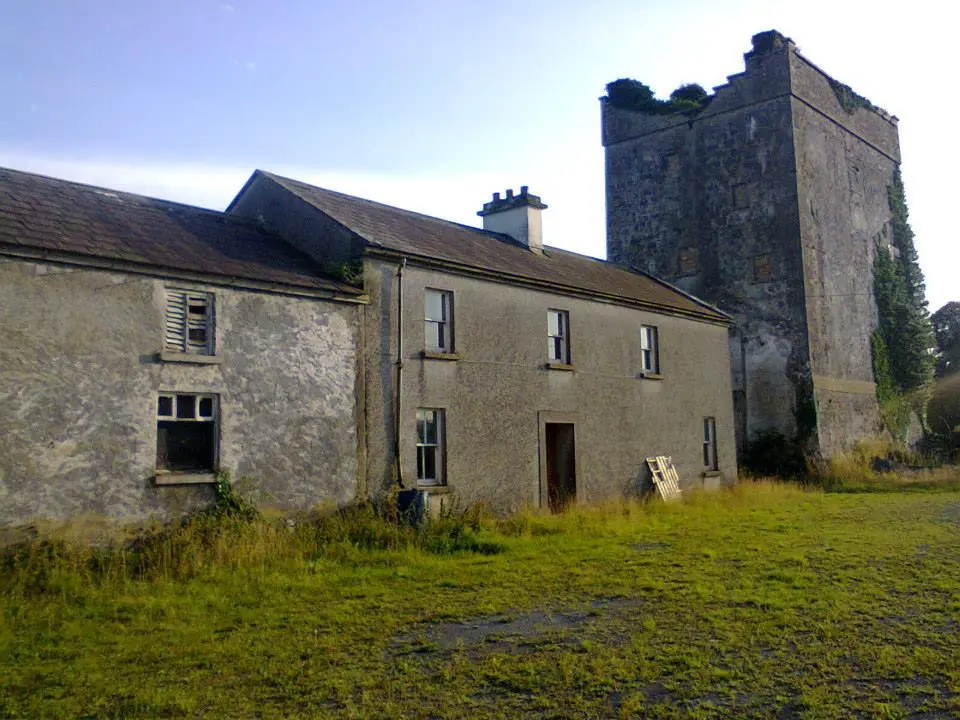
Mikeconneely, CC BY-SA 4.0 via Wikimedia Commons

Monivea Castle, Church of Ireland Monivea, Monivea Playground on the 3D model; tap a pin for its page and directions.
The castle and the woods
The castle stands in extensive woodland inside a stone wall, with two gate lodges, one at the main gate where staff screened visitors. The land was mostly bog; the ffrenches reclaimed it with lime and sheep carcasses worked into the soil, and Robert Percy ffrench bought more land and planted the parkland behind its beech rows. Monivea Woods became home to fox, hare, squirrel and migrating birds, and the Galway Blazers hunted here regularly. The estate is seventeen miles east of the city, north of Athenry.
The mausoleum
In a clearing in the wood stands a small granite castle, 25 feet wide and 30 high with a crenellated roof and a turret: the mausoleum and chapel Kathleen ffrench commissioned for her father, Robert Percy ffrench. Francis Persse, younger brother of Lady Gregory, designed it, the granite came from Wicklow, it took four years and cost 10,000 pounds, close to two million today, and in 1914 the Pope granted an indult allowing Mass to be said in it on special occasions. Kathleen's will of 1938 leaving the castle and estate to the nation led to a dispute. The model on this page pins the castle, the Church of Ireland and the village.
Questions people ask
Who owned Monivea Castle?
What is the ffrench mausoleum?
Written from Wikipedia, "Monivea Castle" (CC BY-SA 4.0), read on 2026-09-19, and from the OpenStreetMap places on the model. Nothing has been added from memory; follow the source for its footnotes.