About Galway
Galway city is a city in County Galway, with 85,910 people at the 2022 census. A fort at the mouth of the Gaillimh, fourteen merchant families behind a wall, a port that traded with Spain, and the city of festivals it turned into. Its motto is “Laudatio ejus manet in secula seculorum”.
- Population
- 85,910 (2022 census)
- Where
- 185 km from Dublin
- Position
- 53.2744° N, 9.0491° W, 25 m above sea level
- In Irish
- Gaillimh
- On the model
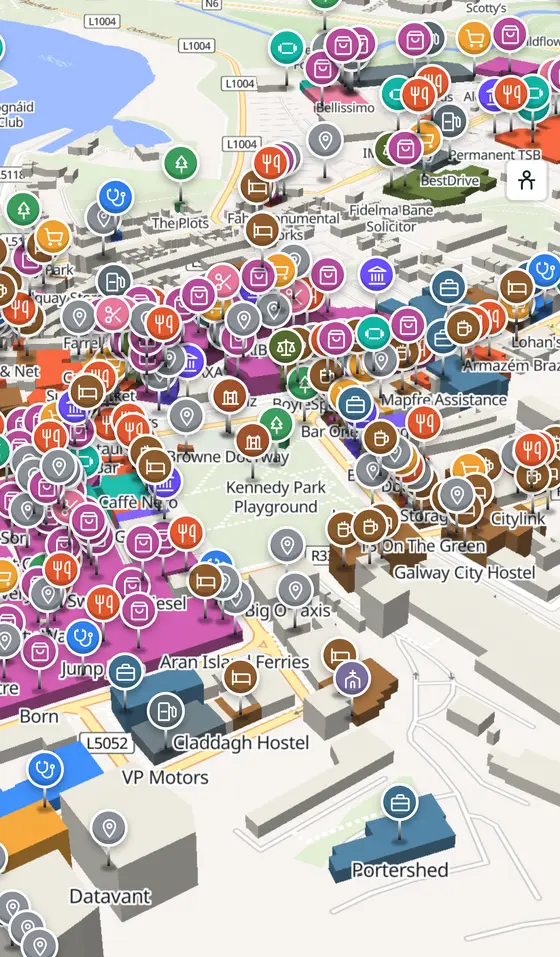
- 39,574 buildings, 840 streets, 2269 places in 266 kinds
- Read more
- Galway on Wikipedia
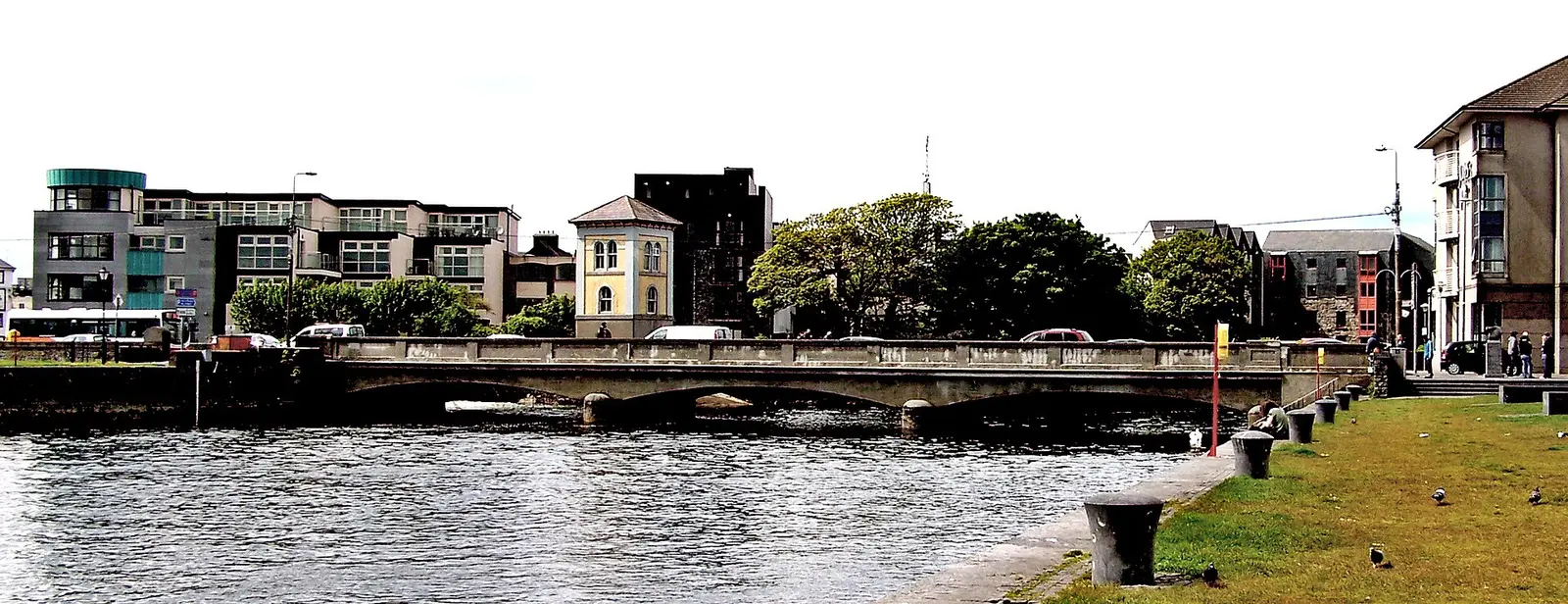
Suzanne Mischyshyn, CC BY-SA 2.0 via Wikimedia Commons

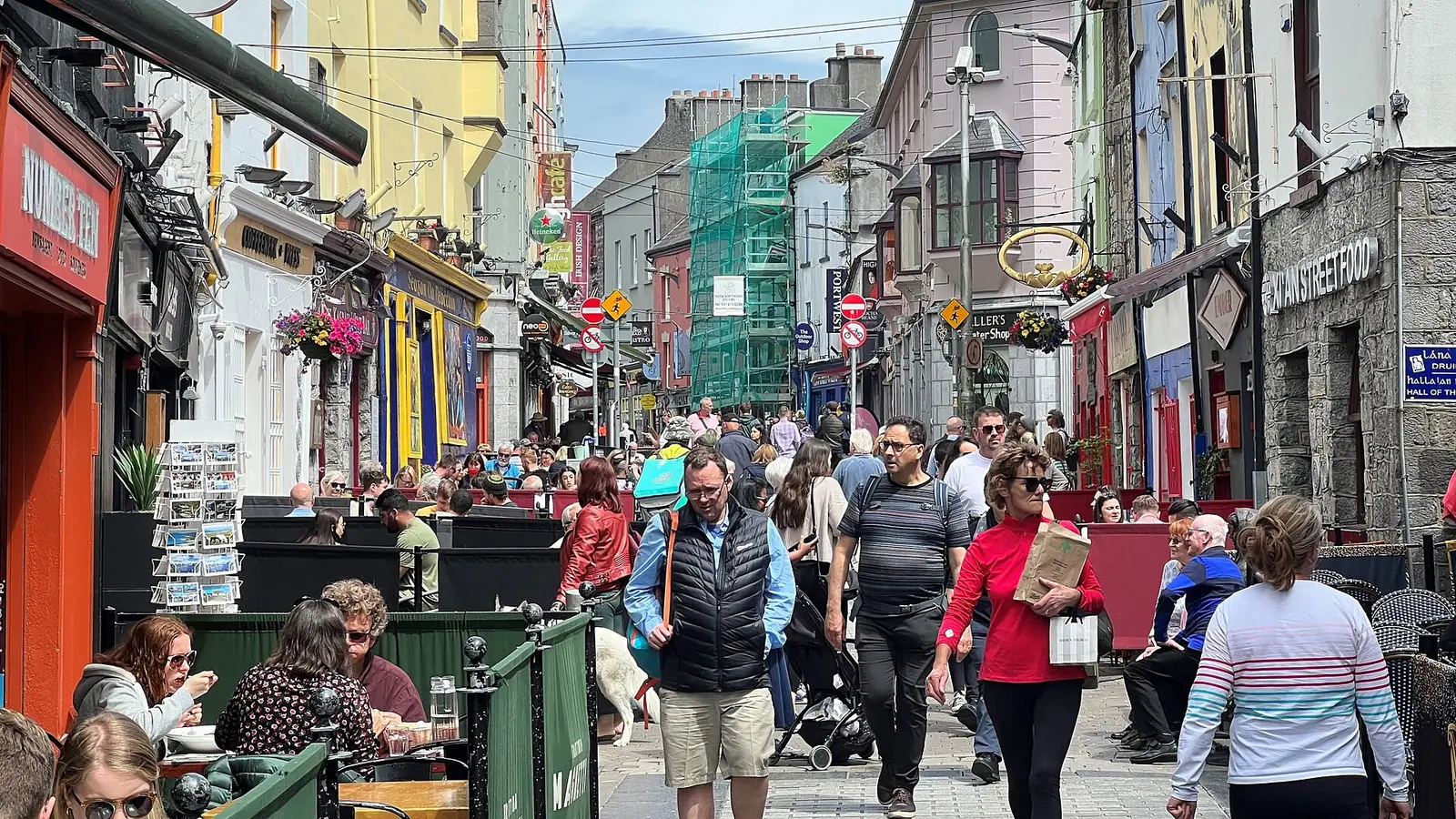
Ian Hawfinch, CC BY-SA 2.0 via Wikimedia Commons

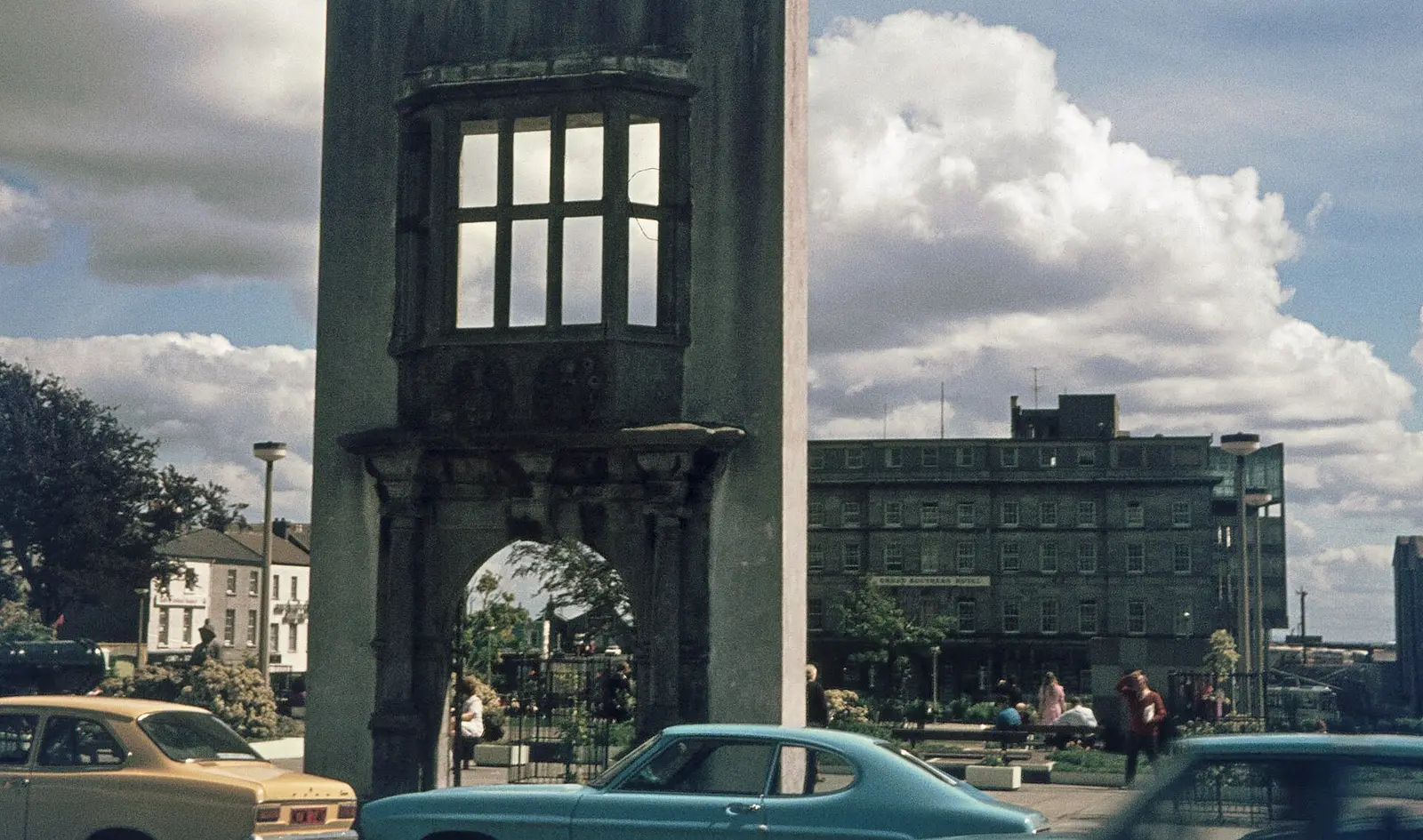
Klaus Liphard, CC BY-SA 2.0 via Wikimedia Commons

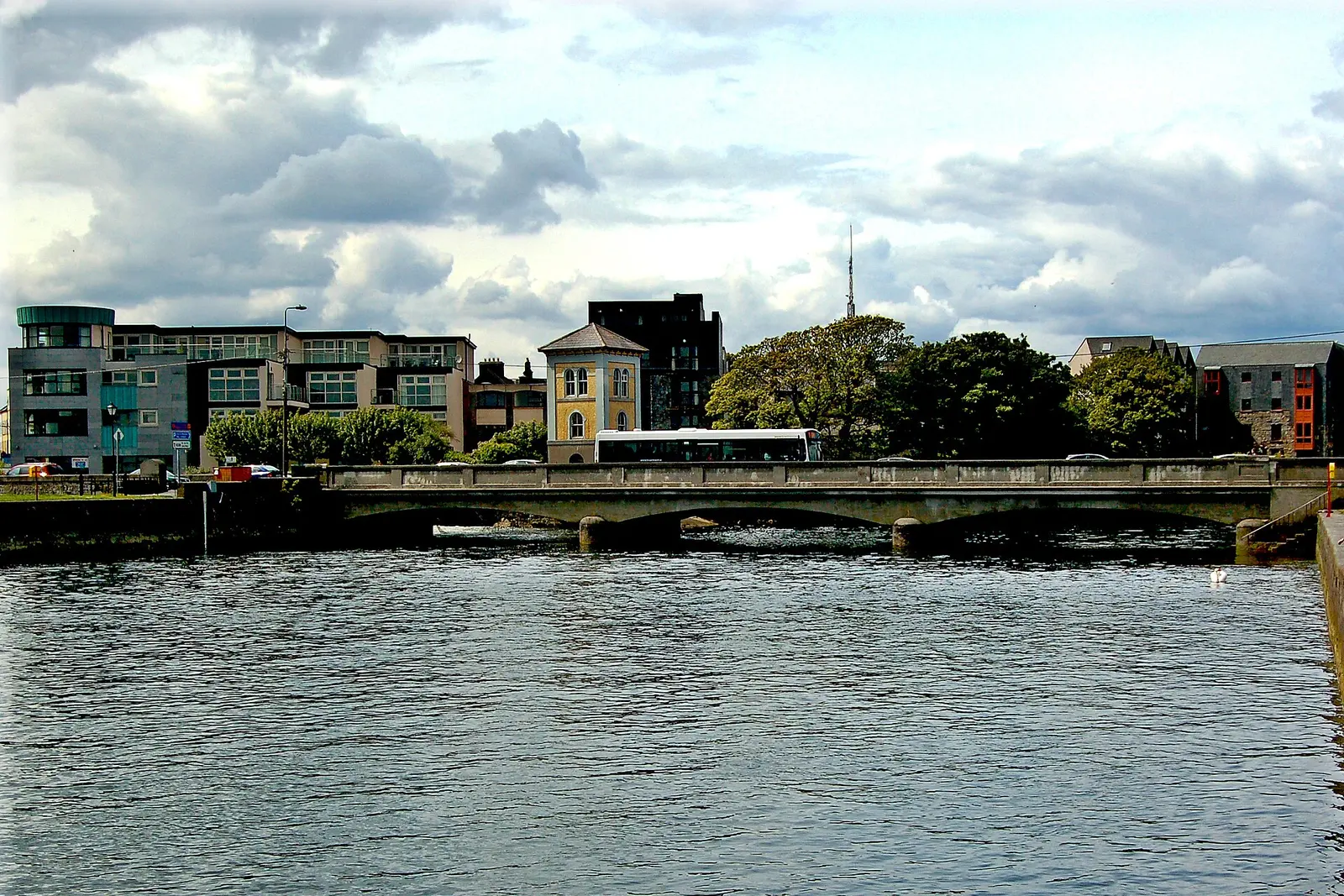
Joseph Mischyshyn, CC BY-SA 2.0 via Wikimedia Commons

A short history
- 1124A fort at the mouth of the river. Tairrdelbach Ua Conchobair, King of Connacht and High King of Ireland, completed Dún Gaillimhe, a fort at the mouth of the river that gives the city its name.
- 1477Columbus at the church. Christopher Columbus visited Galway in 1477, possibly on a voyage towards Iceland.
- 1562Keeping the O'Flahertys out. The town's relations with its Irish neighbours were uneasy.
- 1845 to 1849The Queen's College. The quadrangle of what is now the University of Galway went up in 1849, during the Famine, as one of the three Queen's Colleges of Ireland.
- 1937 to 2001Borough, county borough, city. The urban district became the Borough of Galway in 1937, left County Galway as a county borough in 1986, and was renamed Galway City in 2001.
- 2020European Capital of Culture. Named a UNESCO City of Film in 2014 and European Region of Gastronomy in 2018, Galway was European Capital of Culture for 2020 together with Rijeka in Croatia.
What to see
- Eyre Square62 m
The square at the heart of the city, with Kennedy Park inside it and the banners of the fourteen Tribes flying over it.
The 1519 arch at the end of the old wall, beside the museum that holds the city's heritage collections, the civic sword and mace, and the original statue of the poet Pádraic Ó Conaire.
- Lynch's Castle250 m
A medieval townhouse on Shop Street built by the Lynch family in the sixteenth century, now a bank branch, and the finest reminder of the Tribes in the middle of town.
Founded in 1320 and enlarged over the next two centuries, the largest medieval church in Ireland still in everyday use.
- Galway Cathedral556 m
The Cathedral of Our Lady Assumed into Heaven and St Nicholas, consecrated in 1965 on the site of the old gaol, limestone under a green dome.
The oldest piece of the medieval town, built by the de Burgos in the thirteenth century, where taxes were collected, justice dispensed and banquets held.
Population since 1813
Source: Wikipedia article 'Galway', Historical populations template, citing the CSO census.
Questions people ask
Where is Galway?
What is the population of Galway?
What is there in Galway?
Why is Galway called the City of the Tribes?
What is there to do in Galway?
What is the history of Galway?
Getting around
Galway sits on the M6 to Athlone and Dublin, the M17 to Tuam, the N63 towards Sligo and the M18 to Limerick. 346 bus stops and 28 car parks are on the map.
History, sights and civic facts summarise Wikipedia, "Galway" (CC BY-SA 4.0, read 2026-09-19). Population is the CSO census as listed there. Distances and everything on the model are OpenStreetMap.