The Cleggan Bay Disaster
The boats went out from Cleggan for mackerel on the evening of 27 October 1927 in ordinary weather. A gale came up out of nothing and forty-five men did not come back. Sixteen of them were from Rossadilisk, the village beside Cleggan, and it was never lived in again; nine were from Inishbofin, across the bay, and twenty from County Mayo. Fishing was the only living here, and the loss broke the families that were left.
Checked against the source on 2026-09-19.
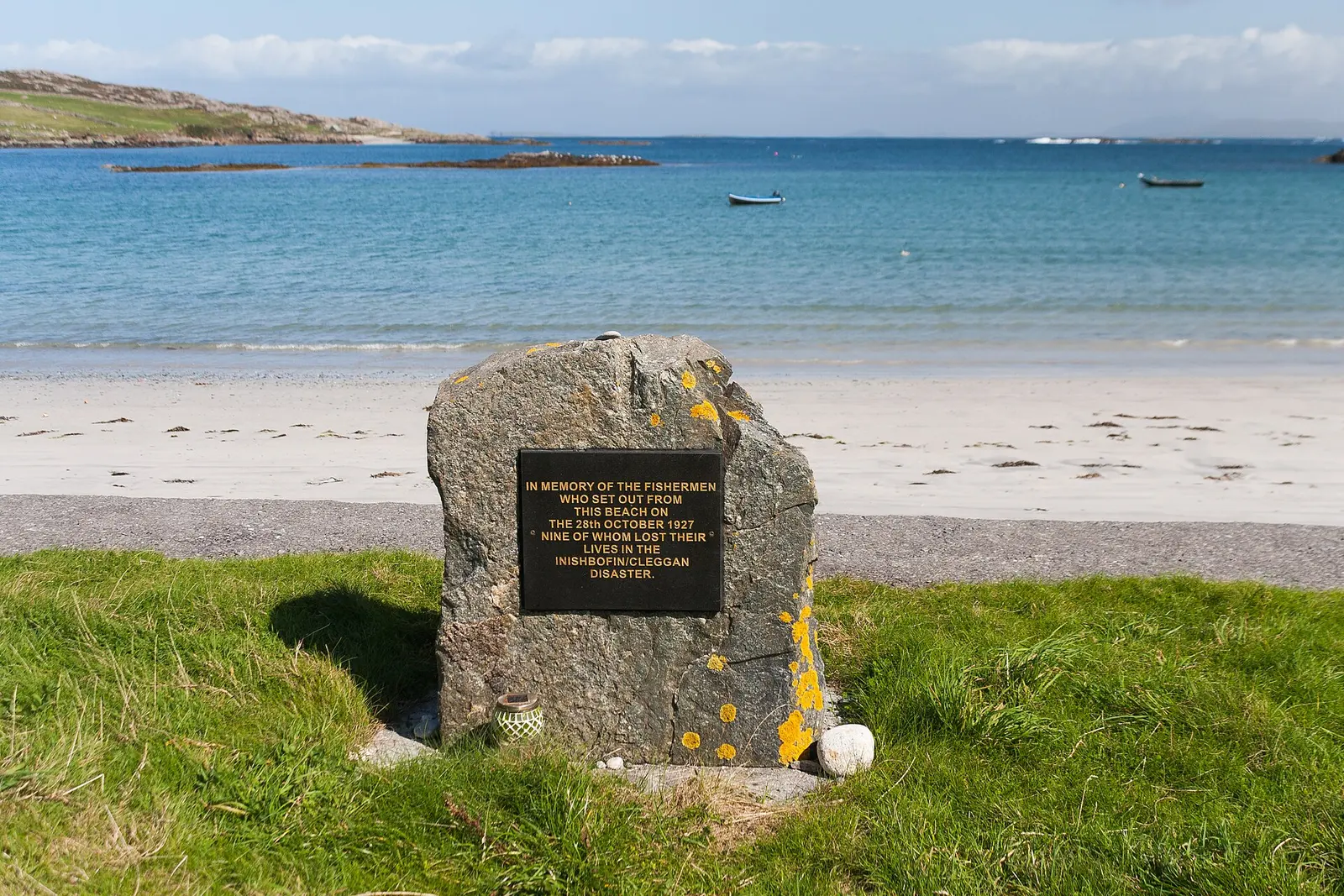
Andreas F. Borchert, CC BY-SA 4.0 via Wikimedia Commons

Cleggan fishing disaster 28th October 1927, Wild Atlantic Way: Cleggan Harbour, Cleggan Signal Tower on the 3D model; tap a pin for its page and directions.
After the storm
Money was collected in the United Kingdom, the United States and Australia to keep the widows and children. The disaster has been remembered since in songs and poems, among them work by Saoirse Mhór and the poet Richard Murphy, who lived in Cleggan and sailed from it, and in a documentary made by TG4. A memorial to the disaster stands on the harbour, and the model on this page pins it with the pier and the signal tower.
Cleggan today
The village is the ferry port for Inishbofin, whose nine dead were mourned on the island; the Inishbofin guide on this site tells the island's story. The Wild Atlantic Way passes through the harbour, and the beaches and cliffs around the bay are on the things-to-do page.
Questions people ask
How many died in the Cleggan Bay Disaster?
What happened to Rossadilisk?
Written from Wikipedia, "Cleggan Bay Disaster" (CC BY-SA 4.0), read on 2026-09-19, and from the OpenStreetMap places on the model. Nothing has been added from memory; follow the source for its footnotes.