The Cross of Cong
The most beautiful object of Irish Romanesque art was made for Tuam, kept at Cong and is in Dublin. The Cross of Cong is an oak cross sheathed in gold, silver, niello, copper, bronze, brass, enamel and coloured glass, made to sit on a staff and carry a piece of the True Cross, with an inscription asking a prayer for Turlough O'Connor, King of Ireland, who had it made for the cathedral church of his time at Tuam.
Checked against the source on 2026-09-19.
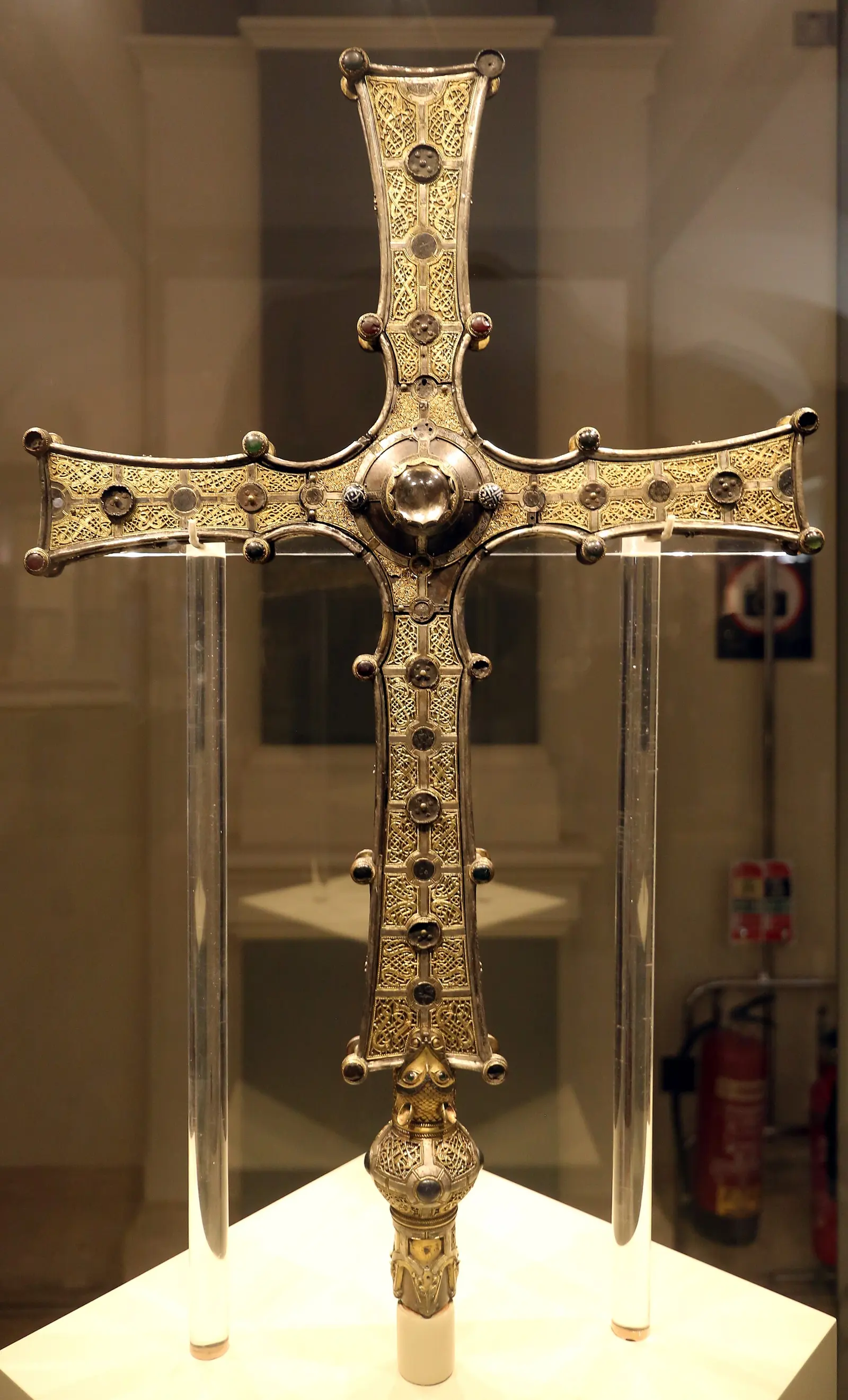
Sailko, CC BY 3.0 via Wikimedia Commons

Cong Abbey, Ashford castle on the 3D model; tap a pin for its page and directions.
Made in Roscommon
Its style, mixing Insular work with Viking and Romanesque strapwork in the Urnes manner, ties it to a group of Roscommon pieces, and the annals, which call it an Bacall Buidhe, the yellow staff, agree that it was made there in the twelfth century, probably commissioned by Bishop Domnall Ua Dubthaig of Elphin, one of the richest sees in medieval Ireland. The Irish inscriptions name Turlough and Muireadhach Ua Dubhthaigh, the senior cleric of Ireland; one is in Latin. The relic gave it its importance and explains its splendour.
Cong and Dublin
The cross later went to Cong Abbey, the Augustinian house at the head of Lough Corrib that Turlough refounded, and took its name from it before passing to the National Museum of Ireland, where it is displayed. The model on this page pins Cong Abbey and Ashford; the Cong Abbey and St Mary's Tuam guides cover the two churches at either end of its story.
Questions people ask
Where is the Cross of Cong now?
Who made the Cross of Cong?
What did the Cross of Cong contain?
Written from Wikipedia, "Cross of Cong" (CC BY-SA 4.0), read on 2026-09-19, and from the OpenStreetMap places on the model. Nothing has been added from memory; follow the source for its footnotes.