An Taibhdhearc
Behind a doorway on Middle Street, inside the medieval town, is the national theatre of the Irish language. The name means a ghostly vision, from taibhse and dearcadh. It opened on 27 August 1928 with a grant of 600 pounds, and its back wall is a wall of the Augustinian friary that stood here first, carved window frames and all.
Checked against the source on 2026-09-19.
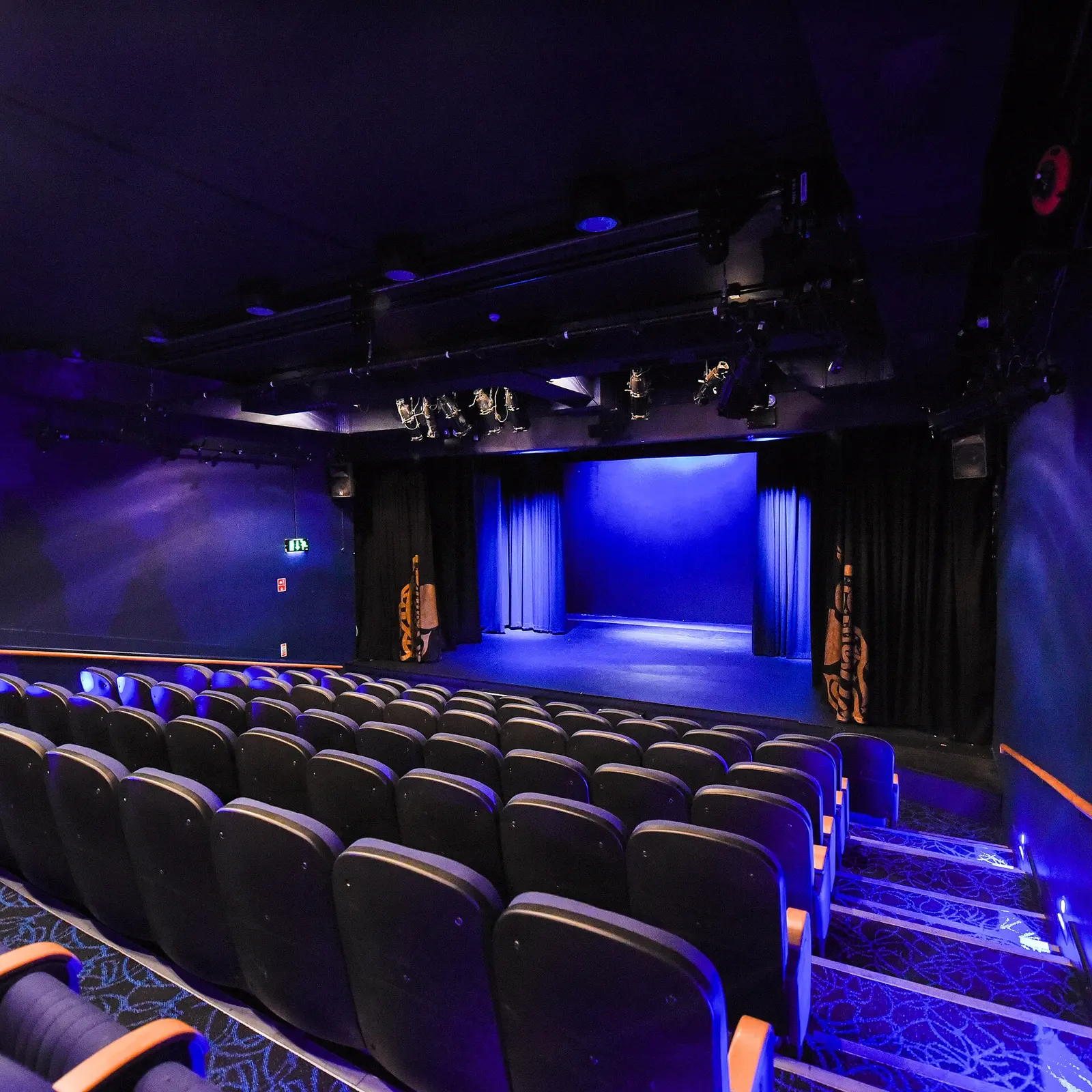
An Taibhdhearc, CC BY-SA 4.0 via Wikimedia Commons

An Taibhdhearc, Lynch's Castle on the 3D model; tap a pin for its page and directions.
Opening night, 1928
The first production was Micheál Mac Liammóir's Diarmuid agus Gráinne, with Earnán de Blaghd, Pádraic Ó Conaire and Lady Gregory in the audience. Since then the theatre has staged drama and music, premiered new plays, hosted poetry and events for the Cúirt International Festival of Literature, and occasionally screened international films. The busiest fortnight of its year is the Arts Festival in July.
Fire and return
A fire in 2007 caused heavy smoke damage and the building closed for a long renovation, the company producing shows in other venues around the city and county until President Michael D. Higgins reopened it in September 2012. In 2024 it received a grant of 6 million euro to support Irish-language productions and issued a public call for new board members. The model on this page pins the theatre with St Nicholas' church and Lynch's Castle a street away.
Questions people ask
What does Taibhdhearc mean?
When did An Taibhdhearc open?
Where is An Taibhdhearc?
Written from Wikipedia, "Taibhdhearc na Gaillimhe" (CC BY-SA 4.0), read on 2026-09-19, and from the OpenStreetMap places on the model. Nothing has been added from memory; follow the source for its footnotes.