Shantalla
Shantalla means the old ground, and for a few decades from 1889 the ground was worth digging. John Miller, a Scot who managed the Galway Marble Works, opened a granite quarry here whose stone was a fine mottled red or pink shot through with green, said by Quarry magazine to be better than Aberdeen granite and to outlast any marble when polished. Fifty years later the corporation built the city's first council estate on the same ground.
Checked against the source on 2026-09-19.
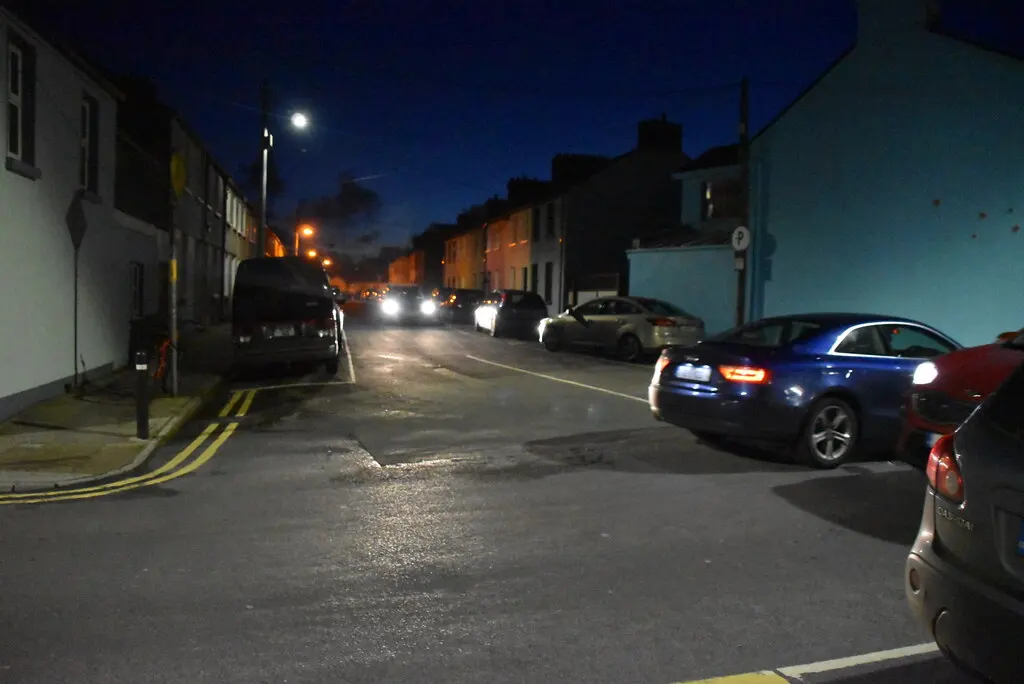
N Chadwick, CC BY-SA 2.0 via Wikimedia Commons

Shantalla Park, University Hospital Galway on the 3D model; tap a pin for its page and directions.
The quarry
Miller's quarry opened in 1889. In 1898 a military officer, Colonel Arthur Courtney, bought out his interest and brought in the firm Tapp and Jones for advice on working it. Quarry magazine wrote of an almost endless supply of beautiful varieties at Shantalla.
The estate
In the late 1940s Galway Corporation planned the housing scheme that is Shantalla today, on four and a half acres facing a new road built near the old Red Lane. Each house was to have a living room, three bedrooms, a lavatory and a scullery; terraced houses were costed at about 350 pounds and gable-end houses at about 379 pounds, and the corporation also took over some unfinished buildings on the site. The story is told in The Story of Shantalla in the Words of its People, published in 2025. The university and the hospital are minutes away; the model pins Shantalla Park.
Questions people ask
What does Shantalla mean?
Was Shantalla the first council estate in Galway?
Written from Wikipedia, "Shantalla" (CC BY-SA 4.0), read on 2026-09-19, and from the OpenStreetMap places on the model. Nothing has been added from memory; follow the source for its footnotes.