Lady Gregory
The woman who ran the Abbey Theatre was born a few miles from Gort into a family that identified with British rule and turned against it. Augusta Persse grew up at Roxborough, a 6,000-acre estate between Gort and Loughrea, learning the legends of the district from the family's Irish-speaking nurse Mary Sheridan. As Lady Gregory of Coole she made her house the meeting place of the Irish Literary Revival, and her motto, from Aristotle, was to think like a wise man but express oneself like the common people.
Checked against the source on 2026-09-19.
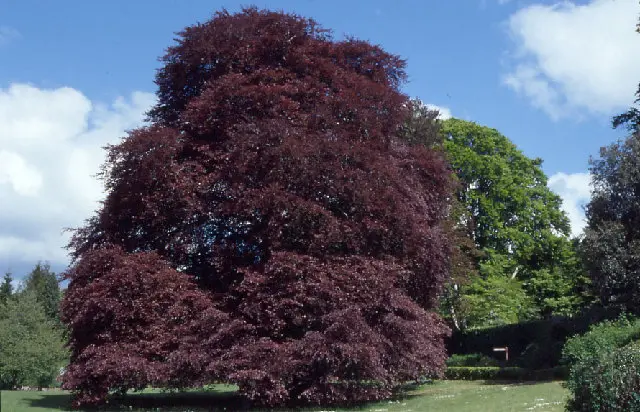
Dr Charles Nelson, CC BY-SA 2.0 via Wikimedia Commons

Coole Park, Thoor Ballylee, Tullira Castle, Kiltartan Castle on the 3D model; tap a pin for its page and directions.
Roxborough and Coole
Educated at home, she married Sir William Henry Gregory, a widower with an estate at Coole, and travelled with him in Ceylon, India, Spain, Italy and Egypt; in Egypt in 1882 and 1883 she had an affair with the poet Wilfrid Scawen Blunt and wrote A Woman's Sonnets, and her first work under her own name, Arabi and His Household, defended the Egyptian nationalist Ahmed Orabi. Roxborough House burned in the Civil War.
Folklore, Yeats and the Abbey
A trip to Inisheer in 1893 woke her interest in Irish and in the folklore around Coole; she organised Irish lessons at the Coole school and collected tales, many from the residents of Gort workhouse, into A Book of Saints and Wonders, The Kiltartan History Book and The Kiltartan Wonder Book. At her neighbour Edward Martyn's Tullira Castle in 1896 she met W. B. Yeats, and by 1899 the three had founded the Irish Literary Theatre, opening with Martyn's The Heather Field and Yeats's The Countess Cathleen. When money ran out in 1901 she, Martyn, Yeats, Synge, Æ, Annie Horniman and the Fay brothers formed the Irish National Theatre Society in 1904, the Abbey. After the Black and Tans killed Eileen Quinn in 1920 she wrote six articles for The Nation on British atrocities.
The tree at Coole
She wrote more than nineteen plays, mostly for the Abbey, in Kiltartanese, and Cuchulain of Muirthemne, which Thomas Kinsella called the best idea of the Ulster stories. Ill health took her off the board in 1928; Coole had been sold to the Forestry Commission in 1927 with a life tenancy, and she died there on 22 May 1932. The autograph tree in the garden still carries the carved initials of Synge, Æ, Yeats and Jack Yeats, George Moore, Seán O'Casey, Shaw, Katharine Tynan and Violet Martin. The model on this page pins Coole Park, Thoor Ballylee and Kiltartan; the Coole Park guide describes the estate as it is now.
Questions people ask
Where was Lady Gregory born?
Where did Lady Gregory meet Yeats?
Where is Lady Gregory buried?
Written from Wikipedia, "Lady Gregory" (CC BY-SA 4.0), read on 2026-09-19, and from the OpenStreetMap places on the model. Nothing has been added from memory; follow the source for its footnotes.